What is Gwent?
Gwent
(a.k.a Gwynt)
originated as a minigame in the video game
The Witcher 3
developed by CD Projekt Red.
Originally designed as a single-player card collection game against AI opponents, Gwent has been reimagined and enhanced for modern multiplayer gameplay in both browser and desktop standalone applications.
This version expands far beyond the original, featuring new factions, cards, abilities, and mechanics while preserving the core strategic gameplay that made Gwent so beloved.
The original Gwent was never designed to be balanced for competitive play. Since NPCs don't complain, the design philosophy encouraged players to build decks with the strongest cards possible to always win.
This version addresses those balance issues by introducing deck restrictions, weakening overpowered cards, and creating more strategic diversity. Cards have been rebalanced, new factions have been added (including Witchers, Toussaint, Lyria & Rivia, Syndicate, Zerrikania, and more), and unique abilities have been distributed to prevent any single dominant strategy.
The game now features over 500 cards across multiple factions, each with distinct playstyles and unique abilities. This expanded content ensures that no single deck dominates the meta, and players must adapt their strategies based on their faction choice and available cards.
By making decks weaker and more balanced, every card choice matters, and players must think strategically about resource management, timing, and bluffing rather than simply playing the strongest cards available.
But how does it play?
Gwent is played with 2 players. They start with the same number of cards and take turns to play these cards one by one until both players pass or are out of cards.
At the end of each round the strength of each player's cards is summed to calculate their score. The player with the highest score wins the round.
First player to win two rounds wins the game.
Gwent is sometimes compared to poker because bluff plays an important role.
Usually you want to win a round with as few cards as possible but since each player can lose a round, you might want to convince your opponent you are trying to win the round and push him/her to play more of his/her best cards, while saving yours.
Cards are a limited resource in the game, so winning requires to make a better use of them.
Board layout
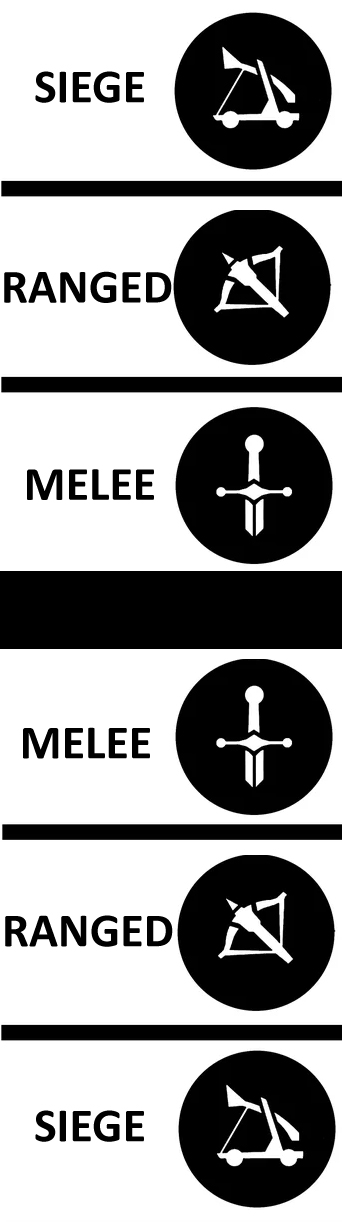
In Gwent, the board is a battlefied divided in two parts, the side of each player.
Each side is made of three distinct rows:
- Melee (or Close Combat)
- Ranged
- Siege
Most cards can be played in only one of these rows. Some special cards can affect only one row at a time.
Concentrating cards in a row or on the contrary spreading them across your side of the battlefield will be important strategic decisions.
This division of the board in three rows and the effects which can apply to them are an important factor in the specificity and elegance of Gwent.
For many players, this is a crucial part missing in the more recent standalone official Gwent game.
So, what are these cards?
In Gwent, there are 3 major kinds of cards:
- Leader cards
- Unit cards
- Special cards
Leader cards
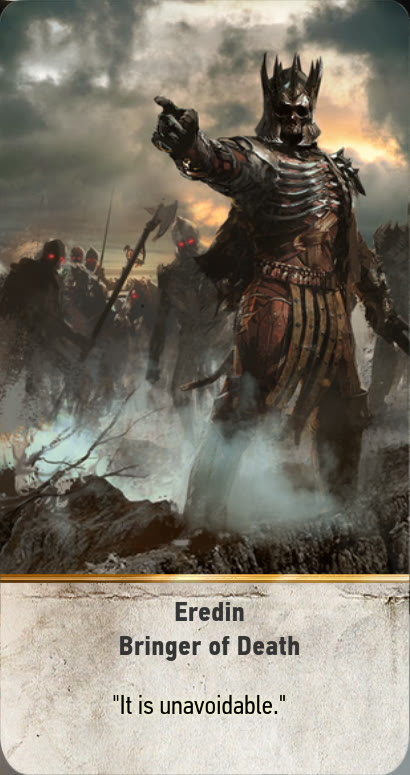
Each player has one and only one leader card, which is chosen before the start of the game. It is not part of the deck.
This card is not played on the battlefield, it remains face up on the side until the end.
It does not have a strength value but it has a strong ability which can affect the board and cards.
Unit cards
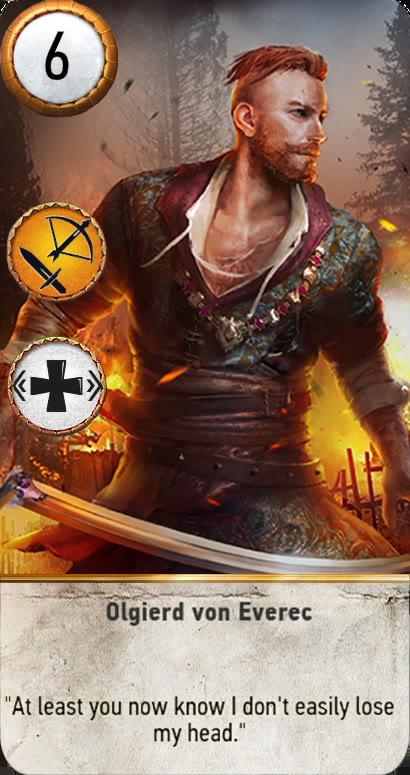
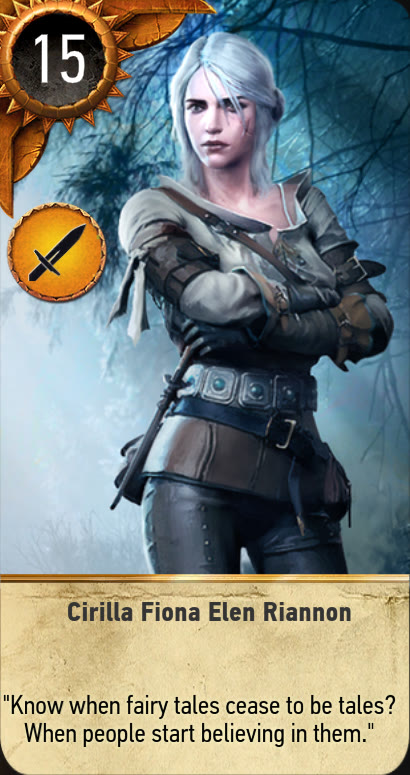
This is the main category of cards, these are the ones with a strength value and which allow to increase the player's score in the round.
Some units have an ability (some even have two), allowing them to affect the board or combine with other cards in order to further increase (or decrease) the scores of players.
These abilities allow to increase the strength of some of your units, summon more cards or remove some other cards from the boad.
Unit abilities is most likely the most important part of the game because it is what brings variety and unpredictability, forcing players to read the opponent strategy and style and react to it approprietly.
A small portion of these units are
Hero
units, their visual is slightly different than the others. Hero units are not affected by any ability, yours or the opponents.
This means that these cards cannot be removed before the end of the round and their strength cannot be changed. Exceptions to this rule are very very rare.
Unit cards can usually be played in only one of the three rows, which is indicated on the card. Some can be placed in one of two rows.
Special cards
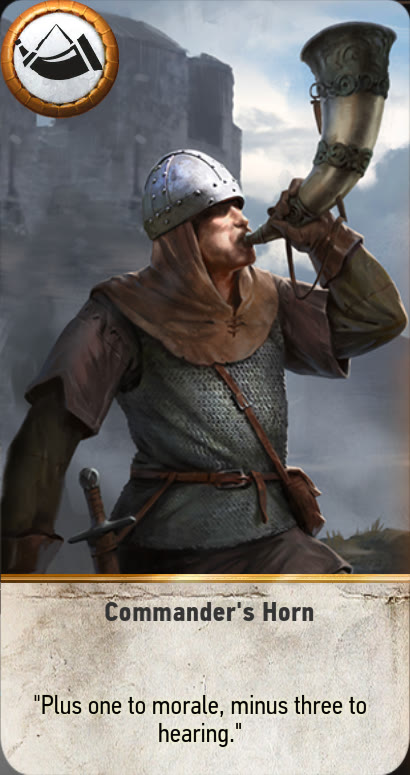
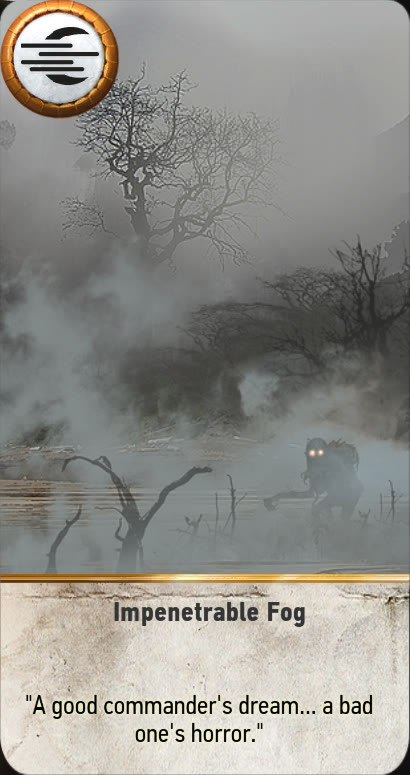
Special cards have no strength but have a powerfull ability which can have a significant effect on the board. They usually either affect a specific or the entire board.
Some special cards have a direct effect and are discarded right after use.
Some provide a durable effect on a row until the end of the round or before another ability removes it. These cards are not played on the battlefield but in a dedicated slot on its side.
A category of these special cards is worth a specific mention, they are called
Weather Cards.
These cards apply a malus in a specific row but for both players at the same time (all unit cards strength is lowered to 1).
They are a powerfull tool which can change the course of a game. Fortunately, there is one special cards allowing to cancel these weather effects, when you have one in your, that is.
These cards play an important role in the strategy of Gwent and in its elegance. They are simple but deadly, it is crucial to anticipate the possibility of the opponent playing them.
How to read the cards
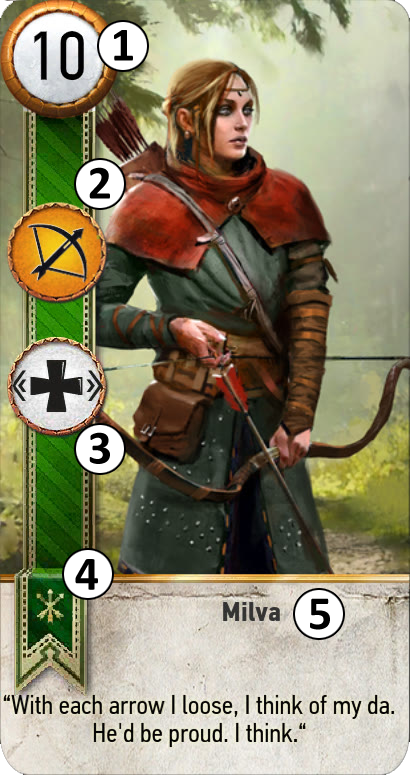
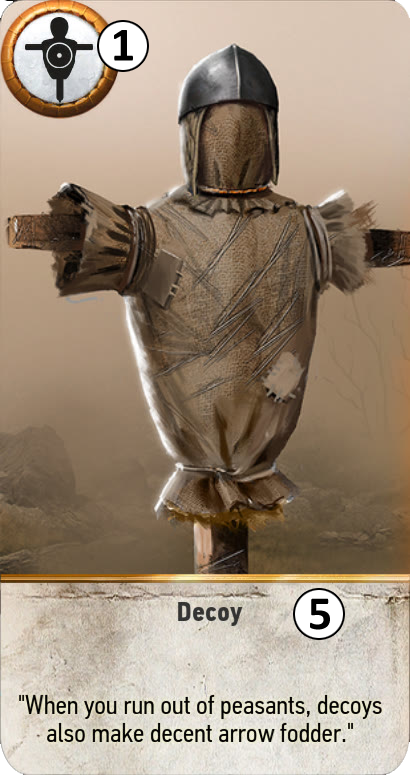
- 1: Strength of the cards to contributes to the player score. What initially on the card is considered the "base strength", since the strength of unit cards can be increased/decreased by other cards. Special cards will have their ability indicated here, instead of the strength.
- 2: Card's row. This icon indicate to which row(s) the card can be placed. Sword means Melee row, Bow means Ranged row and Catapult means Siege row. In some cases, the icon while contain 2 elements, indicating that the card can be placed in several rows, at choice.
- 3: Card's ability, when the card has one. Sometimes a card will have two abilities, the second will similarly be placed bellow this position. Abilities will be explained elsewhere.
- 4: The icon and the coloured ribbon are an indication of the faction the card is part of. Factions will be explained later. If there is no such icon/ribbon, this means the card is neutral and compatible with all factions.
- 5: Name of the card. Most cards also have a custom quote bellow the name, which relates to the character/unit/effect.
Abilities
This card game revolves a lot around a set of abilities, they allow to develop strategies and adapt/react to the opponent's.
The beauty of Gwent is that the number of abilities remains rather low and easy to grasp.
Unlike the official modern Gwent game where each card has a unique effect, the original Gwent has multiple cards having the same ability.
Consequently, it is much easier to understand what a card does (a quick look at the card is usually enough) and what a deck can do.
Abilities available (Alphabetical)
All abilities are listed below in alphabetical order for easy reference.

This is not an ability, but rather a row designation. Cards with "Agile" can be placed in either the Melee (Close Combat) or Ranged row at the player's choice.
This flexibility allows players to adapt their strategy based on the board state, weather effects, or row bonuses. Once placed, the card cannot be moved to another row.
Other flexible row designations include "Any" (can be placed in any row), "Melee/Siege" (can be placed in Melee or Siege), and "Ranged/Siege" (can be placed in Ranged or Siege).

This unit's base Strength is 2 (instead of 1) while affected by Weather.
Adaptive units are more resilient to weather effects than standard units. While most units are reduced to 1 strength by weather, Adaptive units maintain a base strength of 2, making them valuable in weather-heavy matchups. This ability is particularly useful for Ofir faction units that need to overcome harsh environmental conditions.
Can be placed in any row (Close Combat, Ranged Combat, or Siege). Cannot be moved once placed.
This row designation provides maximum flexibility, allowing units to be placed in any of the three rows. This is useful for adapting to weather effects, row bonuses, or strategic positioning needs.

When this card is removed from the battlefield, it summons a powerful new Unit Card to take its place.
Usually a unit with the Avenger ability will be very weak. Playing it is like investing on the future because it will allow yourself to start the next round with an advantage (provided the card wasn't destroyed before the end of the round).
This ability combines very well with Medic.
Note that if the card that should be summoned is in your hand or deck, it will be taken from there. Otherwise, it will be "created" but it will not go into your graveyard when removed.
Draw a card from your deck.
Bank ability is quite simple. You play it and you draw a card from your deck. No complication.
It is a little like skipping a round (you keep the same number of cards in your hand), except you do not know with which card you'll end up.


These two abilities need to be presented together. They are specific to the Skellige faction.
Unit cards with the Berserker ability can be transformed into their more savage form when a card with the Mardroeme ability is played in their row.
Berserker units are initially not very strong, and thus not very interesting if not combined with Mardroeme.
However, their transformed versions are very strong but also very vulnerable to scorch.
Using this ability well isn't easy.

Sets the strength of all Close Combat cards to 1 for both players. This applies before any other ability/effect.
Reduce the base strength of all units in the Melee row (not heroes) to 1, for both players. This weather effect is one of the most common ways to counter strong melee-focused strategies.

When this unit enters play, take a random non-hero, non-modified unit card strength 6 or less from your opponent's deck, and place it on your board in their appropriate row. Your opponent draws a card into their hand.
Bribe allows you to steal a unit from your opponent's deck and play it on your side of the board. The stolen unit must be non-hero, non-strength-modified, and have base strength 6 or less. Your opponent then draws a card to compensate. This ability disrupts your opponent's deck while giving you additional board presence, though the opponent gets card advantage in return.

Removes all Weather Cards (Biting Frost, Impenetrable Fog and Torrential Rain) effects.
Remove all other weather effects currently effective on the board, this applies to all players. This is essential for countering weather-heavy strategies.

Look at the top 3 cards of your deck.
This ability gives you information about what cards are coming up in your deck. The cards are shown in a carousel for viewing, but they remain in your deck in the same order.
This is useful for planning your strategy and knowing what resources you have available.


When using the Slaughter of Cintra special card, destroy all units on your side of the board having the Slaughter of Cintra ability then draw as many cards as units destroyed.
Like the name suggest, the Slaughter of Cintra ability applies to some Cintrian units. Some units have this ability, they are marked for slaugther.
When the corresponding special card is played, all of your cards on the board being marked (having the ability) are destroyed and move to the discard pile.
In return, you draw a card from the deck for each of the removed cards. This gives you a potential card advantage.
The trick is that you are not forced to use the special ability, the marked units can stay on the board and you can keep their strength for your total score.
So your opponent does not know whether you are planning to throw the round for card advantage or if you will keep the units.


Doubles the strength of all unit cards in that row. Limited to 1 per row.
A stronger boost now. Commander' Horn doubles the strength of all units (not heroes then) in the row. It applies last, so it combines well with other boosts.
Here as well, it is more effective in a row with many cards, but the number of cards isn't has important as for Morale Boost. A couple Tight Bond cards might have a larger boost potential than 5 weak cards.
While this ability hold a huge potential, it also makes yourself very vulnerable to Scorch.
When this ability is played through a unit, the unit does not boost itself.
Also, only one Commander' Horn can be effective at the same time in a row. If several cards in the row have it, it will aply only once.

When this unit enters play, add a single special card from your graveyard into your deck, and discard 2 cards from your opponent's deck into their discard pile.
This ability allows you to recover a special card from your graveyard, giving you another chance to use powerful special cards like Scorch, Clear Weather, or Commander's Horn.
Additionally, this ability disrupts your opponent by discarding cards from the top of their deck, reducing their available options and potentially removing key cards from play.

Place this card on your opponent's battlefield on the corresponding row. The next non-hero unit card placed on this row will be destroyed.
Curse is placed on the opponent's side (like a Spy) and counts towards their score. When the opponent plays the next non-hero unit on that row, the Curse card is removed and the unit is destroyed. This ability requires prediction of where your opponent will play units, making it a strategic tool for controlling the board and forcing suboptimal plays.


Swap with a card on the battlefield to return it to your hand.
This ability is often summarized as the counter to spies. It allows to swap one unit on the board with this card (in other words, take the targert card back into your hand).
The Decoy ability has many advantages. Obviously, this is a great counter to spies, because you can restore the balance by playing the spy back and draw cards as well.
But it can also be used on other cards with important abilities, such as Scorch or Medic.
Also, keep in mind that effectively when you play a Decoy, it is almost like skipping a round because your hand size does not reduce, this is often underestimated.

Play your leader's ability now (even if it was used).
Decree allows you to use your leader's ability an additional time, even if you've already used it this game. This provides flexibility and can be crucial for executing key strategies or responding to unexpected situations. The ability is particularly valuable for leaders with powerful one-time effects.

Place on your opponent's battlefield (counts towards your opponent's total). Draw 3 cards from the top of your opponent's deck, place 1 in your deck, then another is randomly discarded, and the last one is inserted back into your opponent's deck. Both your deck and your opponent's deck are shuffled.
This ability is similar to Spy, but instead of drawing from your own deck, you draw from your opponent's deck. This gives you information about their deck composition and allows you to disrupt their strategy by removing a card from their deck.
The card you choose goes to your deck (not your hand), giving you a potential future advantage. One of the remaining cards is randomly discarded to your opponent's graveyard, and the last card is inserted back into your opponent's deck. Both decks are then shuffled to randomize their order.

Destroy a hero card if it is alone in the opposite row.
This ability specifically targets hero units, which are normally immune to most abilities. If there's exactly one hero in the opposite row and no other units, Execute will destroy it.
This is a powerful counter to hero-heavy strategies, but requires careful timing since the hero must be alone in the row.

Sets the strength of all Ranged Combat cards to 1 for both players. This applies before any other ability/effect.
Reduce the base strength of all units in the Ranged row (not heroes) to 1, for both players. This weather effect counters ranged-focused strategies.

The card will remain on the battlefield for two rounds instead of one. Cannot die from any other effect.
Immortal units are extremely resilient. They stay on the board for two rounds instead of one, and cannot be destroyed by any effect (Scorch, Execute, etc.). This makes them powerful defensive units that can provide consistent value across multiple rounds. However, they still count towards the round total and can be affected by weather and other non-destructive effects.

All units with Inspire ability take the highest base strength of the Inspire units on your side of the board. Still affected by weather.
Basically, if you have several units on the board with the Inspire ability, they will align to the highest base strength among them (base strength, meaning before any effect, positive or negative).
Consequently playing late a stronger Inspire unit will boost all others on the board, which can bring an unpleasant and unnexpected surprise to the opponent.
Be aware though that since all Inspire units will have the same strength (prior to effects), they are vulnerable to scorch and can all be destroyed at the same time.
Providing a boost to some of them can help remediate this effect.
Not affected by any Special Cards or abilities.
Hero units are immune to all special cards and abilities, including weather, Scorch, and other removal effects. They maintain their base strength regardless of board conditions. However, they can still be affected by Execute if alone in a row, and they count towards row totals for scoring purposes.

When Nightfall weather is applied to this card's row, transform this card into its target card. The Hunger card is discarded and the target card is played in its place.
Hunger works similarly to Avenger, but is triggered by Nightfall weather instead of card removal. When Nightfall is applied to a row containing a unit with Hunger, that unit transforms into its target card. The transformation discards the Hunger card and plays the target card in its place. This ability is thematic for vampires and other creatures that transform under the cover of darkness.

Pushes all units of the selected row (Melee or Ranged) or row back towards the Siege row, ignores shields.
This ability is quite straight-forward. It is played in either the enemy Melee or Ranged row. All unit cards (not heroes) are moved 1 row backward towards the Siege row.
The purpose of this ability is mostly to break some effective row bonuses (like a Commander's Horn) or to push units into bad weather.

Lock/cancels the ability of the next unit played in that row (ignores units without abilities and heroes).
This ability is actually shared by several special cards. This card is played in one of the opponent's row.
If he/she plays a unit card (not a hero) in that row and that the units has an ability, the card will be locked and this special card will go to the graveyard.
A locked card cannot use its ability until it is removed from the board.
This ability requires a good understanding of the opponent deck and anticipation of the cards it can have.
It is very powerfull at preventing Muster and Tight Bond from working as intended.
Be careful though not to play your spy in this row while a lock is pending.
Triggers transformation of all Berserker cards on the same row.
Mardroeme is a special card that triggers the transformation of all Berserker units on its row. When played, all Berserker units in that row transform into their more powerful forms. This is a key combo ability for Skellige faction strategies.

If this unit dies, draw a card.
This ability provides card advantage when the unit is destroyed. This makes Martyr units valuable targets for Sacrifice or other abilities that destroy your own units, as you can trade them for card advantage.
The card draw happens whenever the unit is removed from the battlefield, whether by Scorch, Execute, or any other means.

Choose one card from your discard pile and play it instantly (no Heroes or Special Cards).
When a card is removed from the board (destroyed or at the end of a round), it goes into the graveyard (aka discard pile).
The Medic ability allows to restore a unit card (not a hero) from the grave.
When a card is restored on the board, its abilities apply again.
This ability is very powerfull because it effectively gives you an additional card on the long term. It also allows you to use again some important abilities, which can be very decisive.
This card is like wine, it gets better with time. The later you play it, the more options of cards you have. If your graveyard is empty, this ability isn't very useful.
A medic can even restore another medic, allowing you to restore yet another card.
Can be placed in either the Close Combat or Siege row. Cannot be moved once placed.
This row designation provides flexibility between melee and siege rows, allowing strategic placement based on board state and weather conditions.

Adds +1 to all units in the row (excluding itself).
Now let's get into row boosting. Morale boost increases the base strength of all units of the row by 1, except on itself. It is obviously more effective if you have many units concentrated in the same row.

Find any cards with the same name in your deck and play them instantly.
When a card with the Muster ability is played on the board, it summons as well all the other cards in your deck and hand with the same name.
In reality, they do not always have the same name but they share a common element which is easily distinguishable.
The power of this ability resides in the fact it can quickly add several cards to the board and increase your total score.
Its weakness is that the cards often have the same strength and can consequently be destroyed all at the same time if not played carefully.
Also, keep in mind that if you have several Muster cards of the same familly in hand, playing one of them will play all the copies in hand, putting you at a disadvantage.
Summon one Panther, one Wolf, and one Raging Bear from your deck and hand.
Menagerie Muster is a specialized variant of Muster that summons exactly one Panther, one Wolf, and one Raging Bear from your deck and hand. Unlike standard Muster, this ability pulls specific cards rather than cards with the same name. The summoned units are marked so they don't trigger their own Muster abilities, preventing recursive summons.

When this unit is played, return all units (including heroes) with a base power of 4 or less to the field in their appropriate rows.
This ability automatically returns all eligible units from your discard pile directly to the battlefield in their appropriate rows. Unlike Medic, which requires selection and only works on non-hero units, Necromancy returns all qualifying units (including heroes) automatically. This can quickly restore multiple units to the board, making it a powerful tool for maintaining board presence.

Affects all rows. When applied, triggers Hunger transformations on units with the Hunger ability.
Nightfall is a unique weather card that affects all rows but does NOT affect unit power values. It is purely visual and transformative - when applied, it triggers the transformation of all units with the Hunger ability on affected rows. The Nightfall overlay provides a visual indicator of the effect. This weather is exclusive to Toussaint faction and is thematic for vampire transformations.

Create a copy of Cat and Dog and add it to your hand.
This ability creates a neutral "Cat and Dog" card and adds it directly to your hand. The card is created from scratch, so it doesn't require having Cat and Dog in your deck or discard pile.
This provides card advantage and gives you a flexible unit that can be placed in multiple rows.

This card stays on the board until the start of your next turn. Prevents any damaging effects (execution, scorch, et al) to your units until the start of your next turn.
This special card provides temporary protection for all your units. It's placed in a special position on the board (between the decks) and has a blue glowing outline.
While active, your units cannot be destroyed by Scorch, Execute, Witch Hunt, or other damaging abilities. The card is automatically removed at the start of your next turn and goes to your discard pile.
This is useful for protecting a strong board position or preventing your opponent from removing key units.

Discard after playing. Kills the strongest card(s) on the battlefield.
Purge works identically to Scorch - it destroys all unit cards (not heroes) having the highest strength on the entire board for both players. The card is discarded after use. This is a Redanian variant of Scorch.

Discard after playing. Kills the weakest card(s) on the battlefield.
Cull is the opposite of Scorch - it destroys all unit cards (not heroes) having the lowest strength on the entire board for both players. The card is discarded after use.
It affects all rows across the battlefield, excluding heroes and shielded rows. All units with the minimum power value are destroyed simultaneously.
This ability is useful for clearing weak units from both sides of the board, but be careful as it can destroy your own weak units as well.
Can be placed in either the Ranged Combat or Siege row. Cannot be moved once placed.
This row designation provides flexibility between ranged and siege rows, allowing strategic placement based on board state and weather conditions.
Doubles the strength of all unit cards in that row. Limited to 1 per row.
Redanian Horn functions identically to Commander's Horn, doubling the strength of all units in the row. This is a Redanian variant of the standard Commander's Horn ability.

When this unit is played, it automatically kills the weakest friendly unit and plays a random higher cost unit from your deck immediately, then shuffles your deck. If no higher cost unit card exists, the friendly unit just dies.
This ability allows you to trade a weaker unit for a potentially stronger one from your deck. The weakest friendly unit is automatically sacrificed, and if there's a unit in your deck with higher base power, it will be played immediately.
This is useful for upgrading weak units or units with beneficial death effects (like Martyr) into stronger units.

Reduces the Strength of all Close Combat and Ranged Combat Units to 1 (non-Hero units only).
Sandstorm is a unique weather effect available to Ofir faction. It affects both Melee and Ranged rows simultaneously, reducing all non-hero units to 1 strength. This makes it particularly effective against decks that rely heavily on melee and ranged units, while leaving siege units unaffected.

This ability is quite simple, it destroys (removes from the board and sends to the graveyard/discard pile) all the unit cards (not heroes) having the highest strength.
It affects the entire board, for both players, so it means you can destroy your own cards.
It is best used when the opponent has several units with the same value (and no other units on the board is stronger) or when a single unit represents a big part of the total strength of the player.
Note that when using this ability from a card, the card is excluded from the effect, it cannot destroy itself and it doesn't count in what the strongest units are.

Destroy your enemy's strongest Close Combat unit(s) if the combined strength of all his or her Close Combat units is 10 or more.
This is a row-specific version of Scorch that only affects the Close Combat (Melee) row. Like Scorch - Ranged and Scorch - Siege, it only triggers if the row's total strength is 10 or more.
This allows you to target specific rows without affecting other rows, making it more precise than global Scorch.

Destroy your enemy's strongest Ranged Combat unit(s) if the combined strength of all his or her Ranged Combat units is 10 or more.
This is a row-specific version of Scorch that only affects the Ranged Combat row. Like Scorch - Close Combat and Scorch - Siege, it only triggers if the row's total strength is 10 or more.
This allows you to target specific rows without affecting other rows, making it more precise than global Scorch.
This ability is a slight variation of Scorch. Instead of affecting the entire board for both players, it affects only one of the opponent row.
If the total strength present in that row is 10 or higher (heroes included), it destroys the strongest units of the row (but not heroes).
Originally, the target row of this effect was the opposite row the card is played in.
However, we have changed it to always target the Melee row to make this ability a little more usable/effective and predictable, because most factions have a lot more Melee units than the other rows.
Also, we believe that having this ability affect only the first enemy line seems more "realistic".

Probably the most infamous ability of the game. We said earlier that cards are the most important resource of the game and that's the aim of this ability, give a card advantage (meaning getting more cards than your opponen).
When this card is played, it goes in the side of your opponent and will contribute to increase his/her total score.
In return, you will draw two cards from your deck. The aftermath is that you gave a card to your opponent but you know have one more card in your card than before, and 2 more options to play later.
In addition to the card advantage this card gives you, having drawn more cards than initially possible gives you more options and more chances to get good combos.
Be careful though, once on the opponent side of the board, the spy is under his/control and it can be played back against you.
A bit like Medic, the Summon Avenger ability takes longer to show its effects.
When a card with this ability is removed from the board (either destroyed or at the end of the round), it is replaced by another more powerful card.
More often than not, this other card will enter battle at the begining of the next round.
Usually a unit with the Summon Avenger will be very weak. Playing it is like investing on the future because it will allow yourself to start the next round with an advantage (provided the card wasn't destroyed before the end of the round).
This ability combines very well with Medic.
Note that if the card that should be summoned is in your hand or deck, it will be taken from there. Otherwise, it will be "created" but it will not go into your graveyard when removed.
These two abilities need to be presented together. They are specific to the Skellige faction.
Unit cards with the Berserker ability can be transformed into their more savage form when a card with the Mardroeme ability is played in their row.
Berserker units are initially not very strong, and thus not very interesting if not combined with Mardroeme.
However, their transformed versions are very strong but also very vulnerable to scorch.
Using this ability well isn't easy.
Like the name suggest, the Slaughter of Cintra ability applies to some Cintrian units. Some units have this ability, they are marked for slaugther.
When the corresponding special card is played, all of your cards on the board being marked (having the ability) are destroyed and move to the discard pile.
In return, you draw a card from the deck for each of the removed cards. This gives you a potential card advantage.
The trick is that you are not forced to use the special ability, the marked units can stay on the board and you can keep their strength for your total score.
So your opponent does not know whether you are planning to throw the round for card advantage or if you will keep the units.

Toussaint Wine ability is like the cross of a Commander's Horn and Morale Boost. The ability will be played and stay on a row and boost all unit cards (not heroes) by 2 (instead of 1 like Morale Boost).
Bank ability is quite simple. You play it and you draw a card from your deck. No complication.
It is a little like skipping a round (you keep the same number of cards in your hand), except you do not know with which card you'll end up.

When this unit enters play, a random non-hero unit in the opposite row cannot gain +Str bonuses from horn, morale, or row effects. Bond with this unit still applies.
Shakedown is a powerful control ability that disrupts opponent strategies by preventing a random unit from benefiting from strength bonuses. The affected unit cannot gain bonuses from Commander's Horn, Morale Boost, Toussaint Wine, Fortify, or other row effects. However, if the shaken down unit tight bonds with the Shakedown unit, that bond bonus still applies. This ability is particularly effective against decks that rely heavily on horn and morale strategies, forcing opponents to adapt their game plan.

When using this ability, you will take control of the units with the lower strength in the enemy Melee row. If there are several, take all.
This ability can be very strong on Muster units or when the enemy Melee row is under bad weather. Be careful though that the timing is key.
Good targets this round might not be available next round because the opponent will have played a weaker card.
This ability protects an entire row from all abilities of the opponent, except weather, until the end of the round.
The main purpose is to protect the row from Scorch. Note that consequently cards in this row do not count in the definition of the highest strength on the board.

This ability is the mirror effect of Scorch Combat, it destroys the weakest units (not heroes) in the opposite row this card is playing on.
It is a very powerfull counter to Muster.
Witcher Abilities
These abilities are unique to the Witcher faction and are related to the various Witcher Schools.

Remains on the board for the following round if another unit on your side of the board had an ability in common.
If at the end of the round you have a card with the Resilience ability on the board and that it shares a second ability with another card on the board, keep the card with Resilience on the board for the next round.
For now, cards with the Resilience ability are Witchers Keeps. They stay on the board if a witcher of the corresponding school was also here.
This card will also contribute to boost witchers of the same school.


This Witcher School ability is actually 5 identical abilities.
There is one variation of the ability for each Witcher School (Wolf, Viper, Cat, Bear and Griffin).
When there is more than one unit card of a same Witcher School, boost all of these by 2 for each other members of the school (e.g. there are 3 cards of the School of the Wolf, boost all units by 4).
This ability seems difficult to exploit, but it works in combination with another ability.


Worshipped units are boosted by the amount of Worshipper units on the board.
This ability requires to combine two type of cards for a powerful result.
Medic units can help to prolongate this combo into later rounds.
Be careful that it exposes a lot Worshipped units to scorch.

When your opponent's total power reaches 12, 24, or 36, draw 1 card.
This ability triggers automatically when your opponent's total score hits specific thresholds. Only one Trade card on the field will trigger per threshold, regardless of how many Trade cards you have in play.
This ability rewards you for letting your opponent build up their board, making it useful for decks that want to play a longer game or need card advantage.

Play on your opponent's battlefield on the corresponding row (counts towards your opponent's total). If any unit is played on this row, the Waylay card is removed and you draw 2 cards.
This ability is similar to Spy in that it goes on your opponent's side and counts towards their score. However, it rewards you when your opponent plays units on that row, giving you card advantage.
The strategic value comes from predicting which row your opponent will play units on, making it a good tool for controlling the flow of the game.

When placed on the battlefield, the unit adjacent gains Battle Guard - any attack that would kill the guarded unit instead kills the unit who guarded the unit.
This ability protects an adjacent unit by redirecting lethal damage to the Guard unit instead. This is particularly useful for protecting high-value units from abilities like Execute or Scorch.
The Guard unit must be placed next to the unit you want to protect, so positioning is important.

When this unit is alone on its row, gain +10 strength.
This ability rewards you for playing a unit on an empty row. The +10 strength bonus is permanent as long as the unit remains alone, making it useful for early game tempo or for protecting a single strong unit.
If another unit is added to the row, the bonus is lost. If units are removed and the Fortify unit becomes alone again, the bonus is restored.

When this unit is placed on the battlefield, move target Dimun Warship and target Cog into its row, as many as are in play (on the battlefield not in hand or deck or discard).
This ability consolidates your naval units onto a single row, making it easier to apply row bonuses like Commander's Horn or Morale Boost to all of them at once.
Only units already on the battlefield are moved - cards in hand, deck, or discard pile are not affected.

Destroys your enemy's strongest Siege Combat unit(s) if the combined strength of all his or her Siege Combat units is 10 or more.
This is a row-specific version of Scorch that only affects the Siege row. Like Scorch - Close Combat and Scorch - Ranged, it only triggers if the row's total strength is 10 or more.
This allows you to target specific rows without affecting other rows, making it more precise than global Scorch.

Prevents the opponent from drawing from their deck on their next turn only. The effect does not stack - only one unit can trigger embargo.
When a unit with Embargo enters the battlefield, an animation plays over the unit and then over the opponent's deck. The embargo animation stays static on the opponent's deck throughout their next turn, preventing them from drawing cards by any means. The effect is removed when the opponent's turn ends. This ability is powerful for disrupting opponent strategies that rely on card draw, but only one Embargo can be active at a time.

Gains +1, +2, and +3 additional strength for up to 3 turns on the board. The bonus increments at the start of your next turn (+1 on turn 1, +2 on turn 2 for a total of +3, +3 on turn 3 for a total of +6).
Veteran units grow stronger the longer they remain on the battlefield. The bonus is cumulative: after the first turn they gain +1, after the second turn they have +3 total (+1+2), and after the third turn they have +6 total (+1+2+3). This makes Veteran units valuable for long-term board presence and rewards protecting them. The ability is particularly effective in Northern Realms decks that focus on maintaining board control.
Factions
The Witcher world is vast, so to bring more variety and fun to the game, it is divided into several factions.
Factions usually represent a realm or a group/faction of people. Each faction has its own set of cards along with a faction ability, and thus its own playstyle.
A faction ability, often passive (triggered at a specific moment of the game) but sometimes active as well (used at the discretion of the player), will have a significant influence on the way to play the game because you need to adapt to it to make the best of it.
Before to start the game, a player must chose the faction to play, which will define the set of leaders and units that can be used to build the deck.
Some unit and special cards are
Neutral,
this means that they can be played in any faction.
Factions available
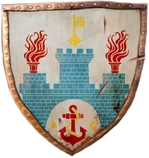
Faction Ability: After drawing your opening hand, you may redraw 1 extra card.
Playstyle: Balanced
Unique Abilities: Witch Hunt
Lore: The Free City of Novigrad stands as an independent city-state, a melting pot of cultures, religions, and political interests. This bustling metropolis is home to mages, fighters, criminals, merchants, and refugees from across the Northern Kingdoms. Amidst this diverse population, the Witch Hunters operate as a unique and inquisitional force, hunting down mages and sorceresses while the free state maintains its autonomy through trade, diplomacy, and the sheer diversity of its people.
Gameplay Description: The Free City of Novigrad represents the independent city-state and its diverse inhabitants. This faction features a mix of mages, fighters, criminals, and other characters from the bustling metropolis. Novigrad's unique Witch Hunt ability allows units to destroy the weakest units in the opposite row, making them excellent counters to Muster strategies. The faction includes various mages and sorceresses, healers, spies, and unique characters that represent the political intrigue and diverse population of the free city. Witch Hunters operate as a unique and inquisitional force within this free state of mages and other assorted peoples. The faction ability provides better opening hand consistency, allowing players to improve their starting position with an additional redraw opportunity.
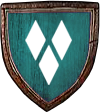
Faction Ability: Once per game, apply a Morale Boost to a row of your choice.
Playstyle: Defense
Unique Abilities: Shield (row protection), Scorch - Siege
Lore: Lyria and Rivia are two neighboring kingdoms in the Northern Realms, often united in their struggles against external threats. These realms are known for their resilience and defensive strategies, having survived numerous wars and invasions. The people of Lyria & Rivia value protection and fortification, building strong defenses and developing tactics that emphasize safeguarding their lands and people.
Gameplay Description: Lyria & Rivia are strong against opponent Siege units, with unique Scorch - Siege abilities that specifically target enemy siege units. They have access to Shield abilities that protect entire rows from opponent abilities (except weather), making them excellent at defensive play. This faction also has Decoy units and Shield special cards, along with Muster and Medic cards. Their defensive capabilities and siege-focused removal make them effective at controlling the battlefield and protecting their own units while disrupting enemy siege strategies.
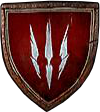
Faction Ability: At the end of each round, a random unit card stays on the board.
Playstyle: Aggressive
Unique Abilities: Sacrifice, Necromancy, Curse
Lore: The wild lands of the Continent are home to countless terrifying creatures and monsters that prey upon the unwary. From ancient vampires and werewolves to grotesque necrophages and insectoids, these creatures represent the untamed darkness that lurks beyond civilization. Many of these monsters are remnants of the Conjunction of the Spheres, a cataclysmic event that brought them from other worlds into the realm of humans.
Gameplay Description: Monsters rely on swarms and Muster abilities, allowing them to quickly flood the board with multiple units. They also have access to Sacrifice, Necromancy, and Curse abilities. Sacrifice allows units to trade weaker allies for stronger units from the deck, while Necromancy automatically returns all units with base power 4 or less (including heroes) from the graveyard directly to the battlefield. Curse units can be placed on the opponent's side to destroy their next non-hero unit played on that row. Combined with their faction ability that keeps units on the board between rounds, Monsters excel at maintaining board presence and overwhelming opponents with numbers.
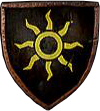
Faction Ability: If a round ends in a draw, Nilfgaard wins the round.
Playstyle: Control
Unique Abilities: Bribe, Conspiracy
Lore: The Nilfgaardian Empire is a vast, expansionist power that seeks to conquer and assimilate all of the Northern Kingdoms. Known for their military might, political intrigue, and sophisticated intelligence networks, Nilfgaard represents order through conquest. The empire's agents and spies operate throughout the Continent, using deception, manipulation, and strategic planning to achieve their goals of imperial dominance.
Gameplay Description: Nilfgaard relies on cheap cost Spies and Conspiracy abilities. Their spies are cost-effective units that provide card advantage while disrupting the opponent. The Conspiracy ability allows units to recover special cards from the graveyard while discarding cards from the opponent's deck, creating both resource recovery and disruption. This faction also has access to Tight Bond units, Medics, and strong cards, making it a control-oriented faction focused on card advantage and strategic disruption.
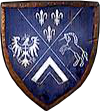
Faction Ability: Draw a card from your deck when you win a round.
Playstyle: Balanced
Unique Abilities: Peace Treaty, Decree
Lore: The Northern Kingdoms represent a collection of independent realms including Temeria, Redania, Kaedwen, and others, each with their own rulers and traditions. These kingdoms have long stood against the expansionist ambitions of Nilfgaard, relying on their experienced armies, fortified positions, and the bonds between their soldiers. The Northern Realms value honor, tradition, and the strength that comes from unity in the face of external threats.
Gameplay Description: Northern Realms has access to Peace Treaty and Decree as unique special cards. Peace Treaty provides temporary protection for all units, preventing damaging effects like Scorch and Execute until the start of your next turn. Decree allows you to use your leader's ability an additional time, even if it was already used. This faction also has access to Tight Bond units, Spies, and strong Siege units, making it a versatile and powerful faction focused on strategic protection and leadership flexibility.

Faction Ability: (Varies by leader)
Playstyle: Control
Unique Abilities: Trade, Adaptive, Sandstorm
Lore: Ofir is a distant, exotic land far to the east, known for its rich trade routes, mysterious magic, and harsh desert environments. The people of Ofir have adapted to survive in extreme conditions, developing unique strategies and abilities that allow them to thrive where others would perish. Their merchants are renowned across the Continent, and their warriors have learned to turn the very elements against their enemies.
Gameplay Description: Ofir features the Trade mechanic and Adaptive units. Trade units automatically draw cards when the opponent's total power reaches specific thresholds (12, 24, 36), rewarding patience and allowing the player to build card advantage over time. Adaptive units have a base strength of 2 (instead of 1) while affected by Weather, making them resilient to weather effects. Ofir can cause Sandstorms, a unique weather effect that reduces Close Combat and Ranged Combat units to 1. This faction excels at overcoming the elements and building incremental advantages through trade and adaptive strategies.
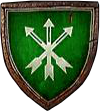
Faction Ability: Before the game starts, this faction decides who plays first.
Playstyle: Aggressive
Unique Abilities: Waylay, Dwarven Guards
Lore: Scoia'Tael, also known as the Squirrels, is a guerrilla organization composed of elves, dwarves, and other non-humans fighting for their freedom and rights against human oppression. Operating from the forests and mountains, they use hit-and-run tactics, ambushes, and their knowledge of the terrain to strike at their enemies. The organization is divided into various commando units, each with their own leaders and methods, united by their shared struggle for equality and independence.
Gameplay Description: Scoia'Tael has Waylay, Dwarven Guards, and high mobility. Most of their units can be placed on more than one row, giving them exceptional flexibility in positioning. The Waylay ability allows units to be placed on the opponent's side and reward card draws when the opponent plays units on that row. Dwarven Guards protect adjacent units by redirecting lethal damage. This faction also has access to Muster and Medic units, making them adaptable and hard to predict.
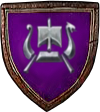
Faction Ability: On the third round, restores two random unit cards from the graveyard.
Playstyle: Aggressive
Unique Abilities: Berserker, Avenger, Skellige Tactics, Skellige Storm
Lore: Skellige is an archipelago of harsh, windswept islands off the coast of the Continent, home to fierce warriors who value honor, strength, and the glory of battle. The Skelligers are known for their naval prowess, berserker warriors, and their belief in an afterlife where the greatest warriors feast in eternal glory. Their culture revolves around raiding, warfare, and proving one's worth through combat, making them some of the most feared warriors on the Continent.
Gameplay Description: Skellige focuses on Siege power, with Berserkers and Avenger abilities, along with special mechanics like Tactics and Storms. Their Berserker units transform into powerful bears when Mardroeme is played, creating devastating combos. Avenger units transform into stronger units when removed from the board, providing long-term value. Skellige Tactics consolidates naval units onto a single row for maximum synergy. They also have access to Skellige Storm weather cards that affect multiple rows, and a balance of Tight Bond, Muster, and Medic units.
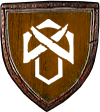
Faction Ability: Start the game with the hero Sigi Reuven on the board.
Playstyle: Control
Unique Abilities: Execute, Bank, Shakedown, Embargo, Shackles
Lore: The Syndicate is a powerful criminal organization that operates throughout the Northern Kingdoms, controlling illegal activities, black markets, and political corruption. Led by figures like Sigi Reuven, the Syndicate uses money, intimidation, and violence to achieve its goals. Their agents include assassins, thieves, corrupt officials, and witch hunters who eliminate threats to their operations, making them a shadowy but influential force in the politics of the Continent.
Gameplay Description: Syndicate excels at control through Shakedown, Embargo, Execute, Shackles, and an extra Scorch card in the form of Murder. Shakedown units prevent random opponent units from gaining strength bonuses, disrupting horn and morale strategies. Execute allows units to destroy hero cards when they're alone in the opposite row, providing a powerful counter to hero-heavy strategies. Shackles (Dimeritium Shackles) can lock opponent units, preventing them from using their abilities. The Bank special card and unit abilities provide card draw, giving card advantage. Embargo disrupts opponent card draw, preventing them from gaining resources. With access to multiple scorch variants, Spies, Muster, and Tight Bond units, Syndicate creates a versatile mix of removal, disruption, card advantage, and board presence.
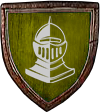
Faction Ability: Draw a card from your deck whenever you lose a round.
Playstyle: Balanced
Unique Abilities: Nightfall, Wine
Lore: Toussaint is a wealthy, opulent duchy in the south, known for its vineyards, chivalric tournaments, and seemingly idyllic way of life. However, beneath the surface of this paradise lies a darker truth, with ancient vampires, political intrigue, and dangerous creatures lurking in the shadows. The duchy's knights and nobles maintain a facade of honor and romance, while the night brings forth the true nature of the land's hidden dangers.
Gameplay Description: Toussaint relies on Nightfall and Wine abilities. Toussaint Wine boosts all units in a row by 2, providing stronger row bonuses than standard Morale Boost. Nightfall is a unique weather card that affects all rows and triggers Hunger transformations on units with the Hunger ability, allowing vampires and other creatures to transform into their true forms. This faction has a balance of Tight Bond, Muster, and Scorch units, along with many strong cards representing the opulent and dangerous duchy of Toussaint.
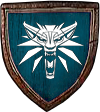
Faction Ability: Once per game, the player can skip a turn.
Playstyle: Balanced
Unique Abilities: Witcher School Synergies, Witcher Keeps (Resilience)
Lore: Witchers are mutated monster hunters trained from childhood in ancient keeps scattered across the Continent. Each witcher school—Wolf, Viper, Cat, Bear, and Griffin—has its own traditions, training methods, and philosophies. These solitary warriors use their enhanced abilities, knowledge of monsters, and mastery of Signs (magical abilities) to protect the world from dangerous creatures, though they are often feared and misunderstood by the very people they protect.
Gameplay Description: Witchers relies on strong heroes and unique signs. This faction features witchers from various schools (Wolf, Viper, Cat, Bear, and Griffin), each with school-specific synergies that boost each other when multiple witchers of the same school are on the board. Witcher Keeps have the Resilience ability, staying on the board between rounds when paired with their corresponding witcher school. Unlike other factions, Witchers have no access to Scorch or Decoy cards; instead, they rely on their Signs (Igni, Aard, Quen, Axii, and Yrden) for spell-like effects, providing unique strategic options through their magical abilities. The faction has a variety of cards representing the broader Witcher world, with powerful heroes and unique sign-based abilities that provide strategic depth.
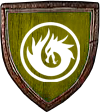
Faction Ability: Restore a random worshipper from your discard pile onto the field whenever you lose a round.
Playstyle: Aggressive
Unique Abilities: Worshipper/Worshipped, Inspire
Lore: Zerrikania is a distant land far to the east, home to fierce warrior tribes and a mysterious dragon cult. The Zerrikanians are renowned for their martial prowess, with Free Warriors who fight for honor and glory, and devoted followers who worship ancient dragons. The land is known for its harsh deserts, warrior traditions, and the powerful bonds between its people, whether through shared combat or religious devotion to the great dragons that once ruled the skies.
Gameplay Description: Zerrikania features the Worshipper/Worshipped mechanic and Inspire abilities. The dragon cult uses Worshipper units that boost Worshipped units by 1 for each Worshipper on the board, creating powerful scaling synergies. Free Warriors have the Inspire ability, where all Inspire units take the highest base strength among them, allowing weaker units to match the strongest. This creates interesting strategic decisions about when to play stronger Inspire units to boost the entire group. Zerrikania has access to more weather cards than other factions, including faction-specific weather effects like Firestorm. The faction ability ensures that Worshippers can be recovered after losing rounds, maintaining the synergy throughout the game.
Setup
Building your deck
To play, each player must chose a faction, a leader and select or prepare a deck of the selected faction.
We have prepared a selection of decks which we think are interesting to play and reasonably balanced.
However, you can constitute your own, the only rules are the following:
- Minumum 22 unit cards (heroes included) from the selected faction or neutral cards.
- Maximum 10 special cards
Tips:
- The more cards you have in your deck, the less likely you are to draw the best cards and make the combos work. Chose wisely, here less is more.
- Hero cards might look powerfull at first, but in the end they are boring and are not the cards that win games because most of them have a limited impact. Consequently, don't take too many of those.
Start
A coin toss decides who starts first. Each player shuffles his/her deck and draws 10 cards. Before starting the game, each player can discard up to 2 cards and draw a replacement (aka Mulligan).
The remaining 10 cards will constitute the starting hand of the players, and most likely all the cards the players will have for the game.
Rounds
Players take turns either playing a card or using the active ability of their leader or faction (when available).
A player can instead chose to pass and sit out of the rest of the round (not play any hard), while the other player is free to play more cards.
When both players have passed or cannot play any other card, the round ends. The player with the lowest total strength loses a round and a life point.
Each player starts with 2 life points and thus loses the game when losing 2 rounds.
Note that in case of a draw, both players have the lowest strength and lose a life point. Unless you play as Nilfgaard (wins in case of draws), this is not a desirable situation.
The players that wins the round plays first in the next round.
Counting the total score can be really bothersome, good thing that here the computer is doing it for us.
But it remains important to understand how it's done in order to anticipate the changes when playing certain cards.
Here are the principles to count the scores.
For each row:
- Weather effects always apply first, before anything else. They change the base strength of the unit cards.
- Some rare faction/leader abilities also affect the base strength. Weather takes precedence over them, but if no weather effect is active, apply these changes first.
- From this point, consider that the strength is calculated from the most specific ability of the card to the more global effects.
- First we apply the Tight Bond effects.
- Then we apply the various boosts (Morale, Witcher School, Toussaint Wine etc), which simply add up one another, order does not matter.
- Last, always last, we apply the row multipler, being the Commander's Horn.